


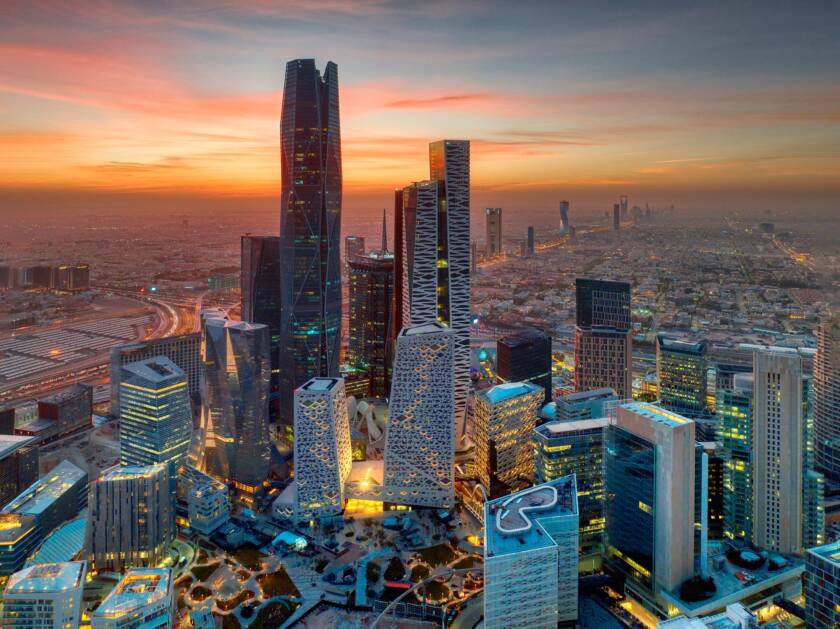
The IDRA World Congress 2026 will bring together the leading authorities, regulators, the private sector, and scientific changemakers of the international water sector in Riyadh, Saudi Arabia. Under the theme «Driving Global Water Sustainability Through Innovation,» the gathering forges is an urgent and strategic space for exchange and action. The goal is to address economic and social survival amid water scarcity, growing demographic and industrial water demands, and intensifying extreme climate events.
Key data of the global water gathering
To showcase the scale of the event and its institutional relevance, the IDRA has confirmed the following logistics and participation structure:
- Date: November 1 to 5, 2026.
- Location and Venue: Riyadh, Saudi Arabia; held at the King Faisal Convention Center within the InterContinental Riyadh hotel.
- Institutional support: Hosted by the Saudi Water Authority (SWA) under the patronage of the Ministry of Environment, Water, and Agriculture of Saudi Arabia (MEWA).
- Expected attendance: More than 2,200 delegates combining government and industry leaders, including around 400 experts specialized in water resource solutions.
- Participating countries and companies: Delegations from over 100 countries. The large commercial trade fair accompanying the congress will occupy two full pavilions dedicated to technology exhibitions by the world’s leading companies and public agencies in the water sector.
- Number of presentations: The program includes more than 200 technical papers evaluated by peer-review committees, distributed across 4 simultaneous conference rooms, along with more than 25 special thematic sessions in the plenary hall and majlis theater.

ALADYR Press. Global water security can no longer be managed with traditional formulas. The climate crisis has proven that freshwater availability is no longer a guaranteed constant, but a critically endangered variable. This congress is fundamental because it directly connects three pillars that usually work in isolation: cutting-edge technology, large-scale infrastructure financing, and regulatory frameworks.
The central debate will not revolve around theory, but rather the economic and legal viability of implementing solutions immediately. Without modern regulations that provide legal certainty to public-private investments, technology cannot transform into real solutions for vulnerable populations, and the private sector will not invest.
Riyadh as the venue: The laboratory of the water future
The choice of Saudi Arabia as the host country for the congress is not accidental, but deeply symbolic and practical. The country represents one of the most challenging geographical environments on the planet: it lacks permanent rivers and faces absolute water stress. However, this extreme vulnerability has forced the nation to become a world leader in water resilience and innovation.
Saudi Arabia leads the world in desalinated water production and has transformed its management through:
- Sustainable mass desalination: Transitioning toward desalination plants powered by renewable energies to mitigate the carbon footprint.
- Circular water economy: Cutting-edge infrastructure for the reuse of treated effluents in agriculture and industry, minimizing waste.
- Vision 2030 Strategy: A national development model that positions water security as the central pillar of national security and economic diversification.
Learning from the host country’s experience offers a glimpse into the solutions that the rest of the world will be forced to adopt in the coming decades.
The role of ALADYR and its relevance for Latin America
Although regions like Brazil possess some of the largest freshwater reserves in the world, unequal distribution and recent climate impacts (such as prolonged droughts and unprecedented floods) prove that no country is safe from the crisis.
In this context, the Latin American Desalination and Water Reuse Association (ALADYR) cements itself as a strategic ally of the IDRA and the IDRA World Congress 2026. Aware of the critical moment facing water infrastructure in the region, ALADYR extends a firm invitation to the entire technical, academic, business, and governmental community of Latin America to attend this gathering.
For Latin American operators and regulators, this summit represents an unmissable opportunity to adopt rapid adaptation technologies. Closely studying desalination models, advanced reuse, and the digitalization of networks through artificial intelligence—with the support and strategic guidance of ALADYR—will allow the region to anticipate scarcity scenarios and optimize existing sanitation infrastructure.
An agenda focused on action
The congress will open on November 1 with the Water Regulation Exchange, the launch of an annual SWA Forum dedicated exclusively to governance, regulatory models, and private participation. During the remaining five days, presentations will break down viable projects on energy efficiency, thermal and membrane desalination, and international financing mechanisms.
The meeting in Riyadh does not seek to diagnose the water problem, but rather to consolidate the technological and political roadmap to guarantee its global supply.
About IDRA: The International Desalination and Reuse Association (IDRA) is the leading global association dedicated to promoting desalination solutions, water reuse, and sustainable treatment technologies. Through its world congresses, it fosters technical exchange, regulatory innovation, and international cooperation to ensure global water security.
About ALADYR: The Latin American Desalination and Water Reuse Association (ALADYR) is a non-profit trade organization founded in 2010 that acts as the leading benchmark for desalination, water recycling, and advanced effluent treatment technologies in Latin America. With a network of over 140 strategic partners, the association promotes efficient water management, structural sustainability, and public-private cooperation across the region. Through specialized forums, technical frameworks, and educational initiatives, ALADYR drives the integration of cutting-edge solutions to mitigate water scarcity, ensure economic development, and protect vulnerable ecosystems
About SWA: The Saudi Water Authority (SWA) is the central government agency responsible for regulating, supervising, and managing the water sector in the Kingdom of Saudi Arabia. Established as part of the country’s institutional restructuring and aligned with Saudi Vision 2030, the SWA oversees national water security, infrastructure planning, and the optimization of the water supply chain. Notably, it serves as the world’s largest producer of desalinated water, spearheading massive investments in sustainable, low-carbon technologies and circular economy frameworks to guarantee reliable supply in one of the planet’s most arid environments.
____________________________________________________________
RIAD ASSUME A LIDERANÇA NO DEBATE GLOBAL SOBRE A ÁGUA DIANTE DA URGÊNCIA CLIMÁTICA
O IDRA World Congress 2026 reunirá as principais autoridades, órgãos reguladores, o setor privado e agentes de inovação científica do setor internacional de recursos hídricos em Riad, Arábia Saudita. Sob o tema «Impulsionando a Sustentabilidade Global da Água Através da Inovação», o encontro se consolida como um espaço urgente e estratégico para intercâmbio e ação. O objetivo é abordar a sobrevivência econômica e social em meio à escassez hídrica, às crescentes demandas demográficas e industriais por água e à intensificação de eventos climáticos extremos.
Dados-chave do encontro global da água
Para demonstrar a magnitude do evento e sua relevância institucional, a IDRA confirmou a seguinte estrutura de logística e participação:
- Data: 1 a 5 de novembro de 2026.
- Local e Sede: Riad, Arábia Saudita; realizado no King Faisal Convention Center, dentro do hotel InterContinental Riyadh.
- Apoio institucional: Organizado pela Saudi Water Authority (SWA) sob o patrocínio do Ministério do Meio Ambiente, Água e Agricultura da Arábia Saudita (MEWA).
- Público esperado: Mais de 2.200 delegados, combinando lideranças governamentais e empresariais do setor, incluindo cerca de 400 especialistas em soluções para recursos hídricos.
- Países e empresas participantes: Delegações de mais de 100 países. A grande feira de negócios que acompanha o congresso ocupará dois pavilhões inteiros dedicados a exposições tecnológicas das principais empresas e agências públicas do setor de água do mundo.
- Número de apresentações: O programa inclui mais de 200 artigos técnicos avaliados por comitês de revisão por pares, distribuídos em 4 salas de conferência simultâneas, além de mais de 25 sessões temáticas especiais no salão plenário e no teatro majlis.
ALADYR Press. A segurança hídrica global não pode mais ser gerenciada com fórmulas tradicionais. A crise climática provou que a disponibilidade de água doce não é mais uma constante garantida, mas sim uma variável criticamente ameaçada. Este congresso é fundamental porque conecta diretamente três pilares que costumam funcionar de forma isolada: tecnologia de ponta, financiamento de infraestrutura em larga escala e marcos regulatórios.
O debate central não girará em torno de teorias, mas sim da viabilidade econômica e jurídica da implementação imediata de soluções. Sem marcos regulatórios modernos que proporcionem segurança jurídica aos investimentos públicos-privados, a tecnologia não poderá se transformar em soluções reais para as populações vulneráveis, e o setor privado não investirá.
Riad como sede: O laboratório do futuro da água
A escolha da Arábia Saudita como país anfitrião do congresso não é acidental, mas profundamente simbólica e prática. O país representa um dos ambientes geográficos mais desafiadores do planeta: carece de rios permanentes e enfrenta um estresse hídrico absoluto. No entanto, essa extrema vulnerabilidade forçou a nação a se tornar líder mundial em resiliência e inovação hídrica.
A Arábia Saudita lidera o mundo na produção de água dessalinizada e transformou sua gestão por meio de:
• Dessalinização em massa sustentável: Transição para usinas de dessalinização alimentadas por energias renováveis para mitigar a pegada de carbono.
• Economia circular da água: Infraestrutura de ponta para o reúso de efluentes tratados na agricultura e na indústria, minimizando o desperdício.
• Estratégia Vision 2030: Um modelo de desenvolvimento nacional que posiciona a segurança hídrica como pilar central da segurança nacional e da diversificação econômica.
Aprender com a experiência do país anfitrião oferece um vislumbre das soluções que o resto do mundo será forçado a adotar nas próximas décadas.
O papel da ALADYR e sua relevância para a América Latina
Embora regiões como o Brasil possuam algumas das maiores reservas de água doce do mundo, a distribuição desigual e os impactos climáticos recentes (como secas prolongadas e enchentes sem precedentes) provam que nenhum país está a salvo da crise.
Nesse contexto, a Associação Latino-Americana de Dessalinização e Reúso de Água (ALADYR) se consolida como uma aliada estratégica da IDRA e do IDRA World Congress 2026. Ciente do momento crítico enfrentado pela infraestrutura hídrica na região, a ALADYR estende um firme convite a toda a comunidade técnica, acadêmica, empresarial e governamental da América Latina para participar deste encontro.
Para os operadores e órgãos reguladores latino-americanos, esta cúpula representa uma oportunidade imperdível para adotar tecnologias de adaptação rápida. Estudar de perto os modelos de dessalinização, o reúso avançado e a digitalização de redes por meio da inteligência artificial — com o apoio e a orientação estratégica da ALADYR — permitirá que a região se antecipe aos cenários de escassez e otimize a infraestrutura de saneamento existente.
Uma agenda focada na ação
O congresso terá início no dia 1 de novembro com o Water Regulation Exchange, o lançamento de um Fórum anual da SWA dedicado exclusivamente à governança, modelos regulatórios e participação privada. Durante os cinco dias restantes, as apresentações detalharão projetos viáveis sobre eficiência energética, dessalinização térmica e por membranas, além de mecanismos de financiamento internacional.
O encontro em Riad não busca diagnosticar o problema da água, mas sim consolidar o roteiro tecnológico e político para garantir o seu abastecimento global.
Sobre a IDRA: A International Desalination and Reuse Association (IDRA) é a principal associação global dedicada a promover soluções de dessalinização, reúso de água e tecnologias de tratamento sustentável. Por meio de seus congressos mundiais, fomenta o intercâmbio técnico, a inovação regulatória e a cooperação internacional para garantir a segurança hídrica global.
Sobre a ALADYR: A Associação Latino-Americana de Dessalinização e Reúso de Água (ALADYR) é uma organização setorial sem fins lucrativos, fundada em 2010, que atua como a principal referência em tecnologias de dessalinização, reciclagem de água e tratamento avançado de efluentes na América Latina. Com uma rede de mais de 140 parceiros estratégicos, a associação promove a gestão eficiente da água, a sustentabilidade estrutural e a cooperação público-privada em toda a região. Por meio de fóruns especializados, estruturas técnicas e iniciativas educacionais, a ALADYR impulsiona a integração de soluções de ponta para mitigar a escassez hídrica, garantir o desenvolvimento econômico e proteger ecossistemas vulneráveis sob sua filosofia «Water Positive».
Sobre a SWA: A Saudi Water Authority (SWA) é a agência governamental central responsável por regulamentar, supervisionar e gerenciar o setor de água no Reino da Arábia Saudita. Estabelecida como parte da reestruturação institucional do país e alinhada com a Saudi Vision 2030, a SWA supervisiona a segurança hídrica nacional, o planejamento de infraestrutura e a otimização da cadeia de suprimento de água. Notavelmente, atua como a maior produtora de água dessalinizada do mundo, liderando investimentos massivos em tecnologias sustentáveis de baixo carbono e estruturas de economia circular para garantir um abastecimento confiável em um dos ambientes mais áridos do planeta.